


Key Takeaways
Aspect |
Key Points |
|---|---|
| What They Are | Fixed-position hydraulic machines that crush large rocks and concrete |
| Main Types | Hydraulic breakers, pneumatic breakers, electric breakers |
| Best Applications | Quarries, demolition sites, mining operations, construction projects |
| Power Range | 200-8000 joules impact energy |
| Key Benefits | Higher power output, consistent performance, reduced operator fatigue |
| Selection Factors | Material hardness, production requirements, site conditions, budget |
What Machine Breaks Rocks?
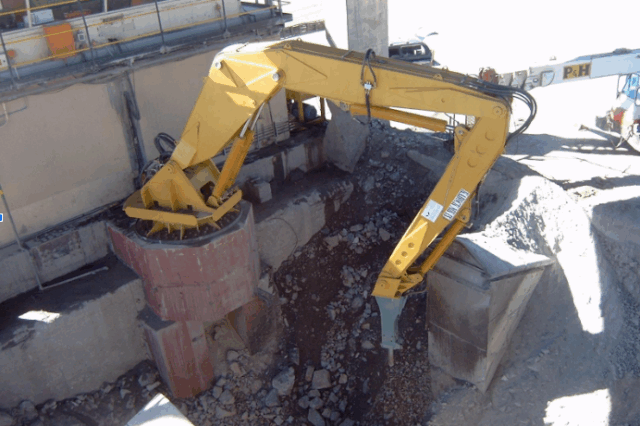
Stationary rock breakers are purpose-built machines designed to fracture hard materials like granite, limestone, and reinforced concrete. These powerful units deliver controlled impacts that split rocks efficiently without the mobility constraints of handheld alternatives.
The core mechanism relies on hydraulic pressure systems that drive a chisel-pointed tool into the target material. Most units generate between 500-5000 joules of impact energy per blow, making them significantly more powerful than portable versions. This raw power comes from their ability to draw unlimited energy from stationary power sources rather than relying on battery packs or small engines.
Mining operations frequently use these machines to break oversized rocks that won’t fit through crushers. The consistent power delivery means operators can work through tough materials without frequent stops for cooling or refueling. Construction sites benefit from their ability to demolish thick concrete walls and foundations that would take hours with smaller equipment.
Professional operators often prefer stationary units for their predictable performance characteristics. You know exactly what force you’re getting with each strike, which helps with planning demolition sequences and estimating job completion times. The fixed position also allows for better safety protocols since the work area can be clearly defined and secured.
Types of Stationary Rock Breakers
Hydraulic Stationary Breakers
Hydraulic models dominate the market due to their superior power-to-weight ratios and precise control systems. These units connect to external hydraulic power packs that can deliver consistent pressure throughout long work sessions. The hydraulic fluid provides smooth operation with minimal vibration transfer to the mounting structure.
Power outputs typically range from 1000-8000 joules, with larger units capable of breaking rocks exceeding two metres in diameter. The hydraulic system allows for variable impact frequencies, letting operators adjust the breaking pattern based on material characteristics. Softer materials might need rapid, lighter blows whilst harder rocks require slower, more powerful impacts.
Pneumatic Rock Breakers
Compressed air systems power these robust units, making them ideal for environments where hydraulic fluid contamination is a concern. Food processing facilities and water treatment plants often choose pneumatic breakers to avoid potential fluid leaks that could compromise product quality or environmental safety.
The air-powered mechanism delivers crisp, clean impacts with excellent heat dissipation properties. Extended operation doesn’t cause the temperature buildup that can affect hydraulic systems during intensive use. However, air compressor requirements mean higher energy consumption compared to hydraulic alternatives.
Electric Stationary Breakers
Electric models suit indoor applications where exhaust fumes from diesel power packs would create ventilation problems. These units plug directly into mains power, eliminating the need for separate power generation equipment. The electric drive systems offer precise speed control and quiet operation compared to diesel or petrol alternatives.
Modern electric breakers incorporate variable frequency drives that adjust motor speed based on load conditions. This smart technology reduces energy consumption whilst maintaining consistent breaking performance. The lack of hydraulic fluid or compressed air systems also means lower maintenance requirements and reduced operational complexity.
How Do I Choose a Rock Breaker?
Material Analysis and Site Conditions
Start by examining the hardness and structure of materials you’ll be breaking. Granite and basalt require different impact patterns than limestone or sandstone. Geological surveys can provide compressive strength data that helps determine the minimum impact energy needed for efficient breaking.
Site accessibility affects equipment selection significantly. Confined spaces might require compact units with specialised mounting systems, whilst open quarries can accommodate larger, more powerful machines. Consider power supply availability – remote locations might favour diesel-powered hydraulic systems over electric units requiring mains connections.
Environmental regulations also influence equipment choice. Noise restrictions in urban areas might rule out high-impact pneumatic systems, whilst dust control requirements could favour enclosed breaking chambers with integrated extraction systems.
Production Requirements and Budget Considerations
Calculate your daily breaking requirements to size equipment appropriately. A unit that’s too small will struggle with large rocks and slow overall productivity, whilst oversized equipment wastes energy and increases operating costs unnecessarily. Most manufacturers provide production rate estimates based on material types and typical rock sizes.
Initial purchase price represents only part of the total cost equation. Factor in power consumption, maintenance schedules, and replacement part availability when comparing options. Some premium brands cost more upfront but offer better parts support and longer service intervals that reduce lifetime expenses.
Operating skill requirements vary between different breaker types. Hydraulic systems need operators familiar with pressure settings and fluid maintenance, whilst electric units might suit facilities with existing electrical maintenance capabilities. Consider your team’s existing skills when selecting equipment types.
Consider the resale value if you’re planning to upgrade equipment in future years. Established brands with strong dealer networks typically hold their value better than lesser-known manufacturers, even if the initial premium seems substantial.
What Is Another Name for a Rock Breaker?
Industry professionals use several terms interchangeably when referring to stationary rock breaking equipment. Understanding these alternative names helps when researching equipment options or communicating with suppliers and contractors.
Hydraulic hammers describe the most common type of stationary rock breaker, emphasising the hydraulic power system that drives the breaking mechanism. This term appears frequently in technical specifications and operator manuals, particularly for heavy-duty mining applications.
Demolition hammers or concrete breakers specify equipment designed primarily for construction and demolition work rather than natural rock breaking. These terms often indicate units optimised for reinforced concrete and structural demolition rather than geological materials.
Impact hammers focus on the mechanical action rather than the power source, encompassing both hydraulic and pneumatic variants. Mining engineering texts commonly use this terminology when discussing rock fragmentation techniques and equipment selection criteria.
Regional variations exist across different English-speaking countries. Australian mining operations often refer to rock hammers or breaker hammers, whilst British quarries might use percussion breakers or impact breakers. American construction sites frequently specify stationary hammers or mounted breakers to distinguish from handheld alternatives.
Advantages of Stationary Rock Breakers Over Portable Units
Power and Performance Benefits
Stationary mounting systems allow for much larger impact mechanisms than portable alternatives can support. The fixed base absorbs reaction forces that would otherwise need to be managed by an operator, enabling impact energies that would be impossible to control with handheld equipment.
Continuous power supply eliminates the performance degradation that affects battery-powered portable units as charge levels drop. Hydraulic systems maintain consistent pressure throughout the work session, whilst electric units deliver steady power without the voltage fluctuations that can affect portable tools.
Heat dissipation improves dramatically with stationary installations. Large hydraulic reservoirs and cooling systems prevent the overheating that limits portable unit duty cycles. This means fewer breaks for cooling and higher overall productivity throughout the working day.
Safety and Ergonomic Improvements
Operator fatigue reduces significantly when workers don’t need to support heavy breaking equipment during operation. Stationary units allow operators to work from safer distances whilst maintaining precise control over breaking patterns and impact locations.
Vibration exposure drops substantially since the breaking forces transfer through the mounting structure rather than through the operator’s body. This reduction in whole-body vibration helps prevent long-term health issues and allows for longer productive work periods without discomfort.
Better visibility of the work area comes from the operator’s position away from the immediate impact zone. This improved perspective helps with precision work and reduces the risk of accidents from flying debris or unexpected material movement.
Installation and Setup Requirements
Foundation and Mounting Considerations
Proper foundation design ensures stable operation and maximises equipment lifespan. The mounting base must absorb impact forces without transmitting excessive vibration to surrounding structures. Concrete foundations typically need to weigh at least three times the breaker weight to provide adequate stability.
Soil conditions affect foundation requirements significantly. Rocky ground provides excellent natural stability, whilst soft soils might need deep foundations or ground improvement before equipment installation. Geotechnical surveys help determine appropriate foundation designs for specific site conditions.
Mounting height and angle affect breaking efficiency and operator safety. The breaker should position the impact point at an optimal angle for the material being processed, usually between 60-90 degrees to the work surface. Access platforms might be needed for operator comfort and maintenance activities.
Power Supply and Utility Connections
Hydraulic power packs require careful sizing to match breaker requirements without excessive oversizing that wastes energy. Variable displacement pumps offer better efficiency across different operating conditions than fixed displacement alternatives, though they cost more initially.
Electrical connections need adequate capacity for starting loads that can exceed running loads by 300-400%. Soft-start systems reduce electrical demand but add complexity and cost to the installation. Consider power factor correction equipment to avoid utility penalties in commercial installations.
Cooling water requirements vary by climate and duty cycle. Closed-loop systems recirculate cooling water through heat exchangers, reducing water consumption but requiring more complex piping and controls. Open-loop systems use less equipment but need adequate water supply and disposal arrangements.
Regular maintenance schedules keep stationary rock breakers operating efficiently and safely. Daily checks should include hydraulic fluid levels, air pressure readings, and visual inspection of all mounting bolts and connections.
Applications and Industry Uses
Mining and Quarrying Operations
Primary rock breaking in mining operations relies heavily on stationary breakers for processing oversized material that won’t fit through primary crushers. These units handle rocks up to several metres in diameter that would otherwise require expensive explosive reduction or manual breaking techniques.
Quarry operations use stationary breakers to size dimensional stone blocks accurately. The controlled impact allows for precise splitting along natural grain lines, maximising the yield of usable stone whilst minimising waste. This precision becomes especially important with expensive decorative stones like marble or granite.
Underground mining presents unique challenges where stationary breakers excel. The fixed installation works well in confined spaces where mobile equipment movement is difficult. Remote operation capabilities allow breaking work to continue whilst personnel remain in safer areas away from potential rockfall hazards.
Construction and Demolition Projects
Building demolition projects benefit from the controlled power delivery that stationary breakers provide. Large concrete structures require systematic breaking that portable equipment can’t match for speed and precision. The ability to work continuously without operator fatigue helps maintain consistent progress on time-sensitive projects.
Road construction uses stationary breakers for breaking up existing concrete pavements and preparing aggregate materials. The consistent sizing helps ensure proper compaction and drainage characteristics in the finished road surface. Bridge demolition particularly benefits from the precision control that prevents damage to nearby structures.
Tunneling operations employ stationary breakers for enlarging existing tunnels or creating new openings through rock formations. The fixed mounting allows for precise control over the excavation profile whilst maintaining safe working distances from the breaking face.
Frequently Asked Questions
How much power do stationary rock breakers need?
Power requirements vary significantly based on the material hardness and desired production rates. Small units suitable for concrete breaking typically need 15-30 kW, whilst heavy-duty mining breakers can require 100-200 kW or more. Hydraulic systems generally offer better power efficiency than pneumatic alternatives.
What maintenance do stationary rock breakers require?
Daily maintenance includes checking hydraulic fluid levels, inspecting impact points for wear, and verifying all mounting bolts remain tight. Monthly servicing typically involves filter changes, lubrication of moving parts, and more detailed wear inspections. Annual overhauls might include seal replacement and major component inspection.
Can stationary rock breakers work in wet conditions?
Most modern units handle wet conditions well, though performance can vary by material type. Wet rocks often break more easily due to reduced internal friction, but cleanup becomes more difficult with muddy conditions. Ensure electrical components have appropriate weatherproofing ratings for outdoor use.
How long do stationary rock breakers last?
Well-maintained units typically provide 8-15 years of productive service, depending on usage intensity and material hardness. Impact tools need replacement every 200-500 hours of operation, whilst major components like hydraulic cylinders might last 3000-5000 hours. Regular maintenance significantly extends overall equipment life.
What safety equipment is needed around stationary rock breakers?
Eye protection, hearing protection, and hard hats are essential for all personnel in the work area. Safety barriers should prevent access to the impact zone during operation. Emergency stop controls must be accessible to operators, and communication systems help coordinate work activities safely.
How accurate are stationary rock breakers for precision work?
Modern units with electronic controls can achieve placement accuracy within 25-50mm for most applications. Hydraulic systems generally offer better precision than pneumatic alternatives due to smoother power delivery. Operator skill significantly affects precision, with experienced operators achieving much better results than newcomers.